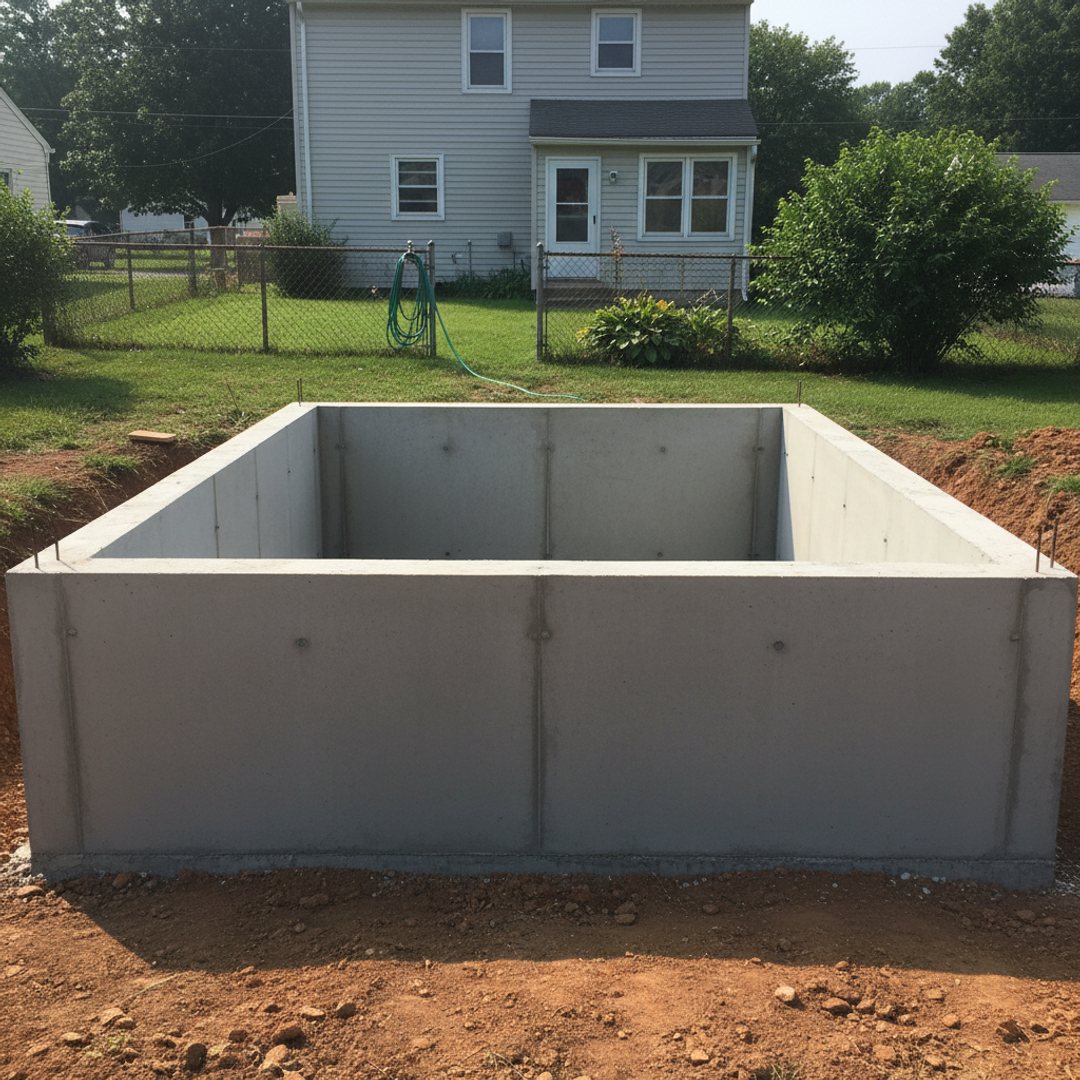
Steelton sits right on the Susquehanna, and a lot of the borough was built up around the steel mill in the early 1900s. That means a good chunk of the driveways, sidewalks and stoops you're looking at replacing are sitting on ground that was never engineered for them in the first place, just graded and poured. If you're getting quotes for new concrete or a repair on one of these older lots, the contractor's answer to a few blunt questions will tell you more than anything on their website.
Ask what's going in the mix, not just what it costs
Central Pennsylvania gets real winters. We run somewhere in the range of 30 to 60 freeze-thaw cycles a season between November and March, and Steelton streets see plenty of road salt and driveway salt on top of that. Concrete that isn't air-entrained, meaning it doesn't have the tiny air bubbles mixed in that give water room to expand when it freezes, will scale and flake within a few winters. Ask for 6% air entrainment, give or take, on anything exposed outdoors. Ask what PSI they're pouring at, too. A lot of driveway work should be 4,000 PSI or better, not the 3,000 PSI mix that's fine for a basement floor but too soft for a truck driving over it every day. A contractor who can't answer either question off the top of their head hasn't thought about it, which means they're not thinking about your winter.
Check the license, the insurance, and who actually shows up
Pennsylvania requires home improvement contractors to register with the state, and it's worth asking for that registration number before you sign anything. Ask for proof of liability insurance too, not because you expect a problem, but because if a mixer truck backs over a neighbor's fence or a laborer gets hurt on your property, you don't want that landing on you. Also ask a plain question: who is actually going to be on site pouring and finishing the concrete? Some outfits sell the job, then hand the crew off to a sub you've never met. That's not automatically bad, but you should know it going in.
Look at your lot the way water does
A lot of Steelton's older streets, especially around the row homes near Front and Second, have narrow lots and alleys with not much room to grade a slope away from the house. Newer construction out toward Swatara Township or Lower Swatara has more yard to work with, but the clay-and-shale subsoil common in this part of Dauphin County still doesn't drain fast. It holds water, swells when it's wet, and shrinks when it dries out, and that movement is what cracks slabs that were poured on unprepared soil. A contractor who's paying attention will talk to you about grading the site to fall away from the foundation, usually about a quarter inch of drop per foot, and about a compacted gravel base under the slab, typically 4 to 6 inches, so the concrete isn't sitting directly on soil that shifts. If a downspout dumps straight onto the spot they're about to pour, that should come up in the conversation before it comes up as a callback six months later.
What the contract should actually say
A one-line estimate on a napkin isn't a contract. What you want in writing includes the thickness of the slab (4 inches is standard for a driveway or patio, more like 5 to 6 inches if it's going to see a car or a small truck regularly), whether it's reinforced with rebar or wire mesh, and where the control joints go. Control joints are the cuts, usually spaced every 8 to 10 feet, that give the slab a place to crack on purpose instead of cracking wherever it wants. They should be cut within about 24 hours of the pour, while the concrete is still green enough to saw cleanly but strong enough to hold the cut. Ask how long before you can walk on it, usually 24 to 48 hours, and how long before you can park a car on it, typically a full 7 days, sometimes longer if the weather's cold or wet. If the quote doesn't mention curing time at all, that's a gap worth asking about.
For anything structural, like a retaining wall over a few feet tall or a slab foundation, the borough will likely require a permit and an inspection, and Dauphin County can be involved depending on the scope. A legitimate contractor pulls that permit themselves or walks you through doing it, and they don't act annoyed that you asked. If your street falls under an HOA, which is more common in the newer developments outside the borough than in Steelton proper, get written confirmation the work fits the association's rules before the truck shows up.
The red flags that mean you walk away
- A bid that's dramatically lower than everyone else's with no explanation. Concrete, rebar, and labor cost roughly the same no matter who's pouring it. A big gap usually means a thinner slab, no rebar, or a crew that's going to disappear if something goes wrong.
- Pressure to pay the full amount up front, in cash, before any work starts. A deposit is normal. The whole job, paid before a truck arrives, is not.
- No mention of joints, thickness, or PSI anywhere in the quote. If none of that's on paper, you have no way to hold them to it later.
- Reluctance to give you a registration number or insurance certificate. That's a two-minute request for anyone running a real business.
- Scheduling a pour during a hard freeze or right before one, without adjusting the mix or covering it. Concrete that freezes before it's cured loses strength it never gets back.
None of this is complicated, it's just specific, and a contractor who's done real work in this area will already have answers ready. We've poured driveways, patios, walks, and foundations across Steelton and the towns around it, and you can see the range of that work on Classic Concrete Co's site if you want to compare notes before you decide who gets the job.