Every job below is one we do ourselves across Steelton.
A driveway takes the weight of your car every day and the frost heave every winter, so we run rebar on 18-inch centers instead of wire mesh on anything wider than a single car width. We pour a 4 to 6 inch slab depending on soil and grade, and we saw-cut control joints within the first 24 hours so the concrete cracks where we tell it to instead of down the middle. Give it seven days before you park a car on it, thirty before anything heavier.
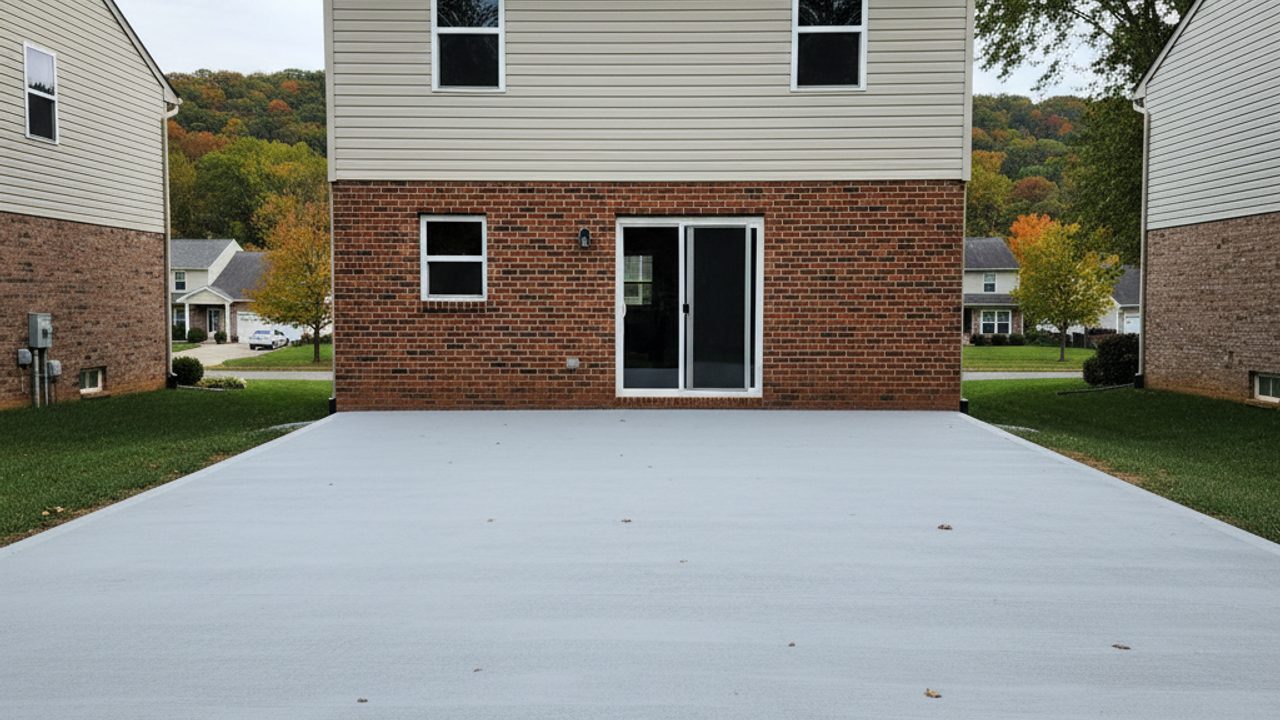
Patios don't carry the load a driveway does, but they take more foot traffic, planters, and grill grease, so finish matters more than mix design. We can broom finish, exposed aggregate, or stamp it to look like flagstone or brick, and we slope it a quarter inch per foot away from the house so water doesn't pool against your foundation.
Stamped concrete gets you the look of pavers, brick, or slate without the individual joints that let weeds and ants in. We color it two ways, integral color mixed into the batch or a color hardener broadcast on the surface, and we seal it once it's cured so the color doesn't wash out under a hose. Stamping has to happen while the slab is still plastic, so timing the pour to the weather matters as much as the pattern.
Spalling, pop-outs, and hairline cracking usually mean water got into the slab before it fully cured or road salt has been eating at the surface for a few winters. We can patch and resurface a slab that's still structurally sound, but if it's heaved, settled, or cracked clean through, cutting it out and re-pouring is the honest answer. We'll tell you which one you actually need before we quote it.
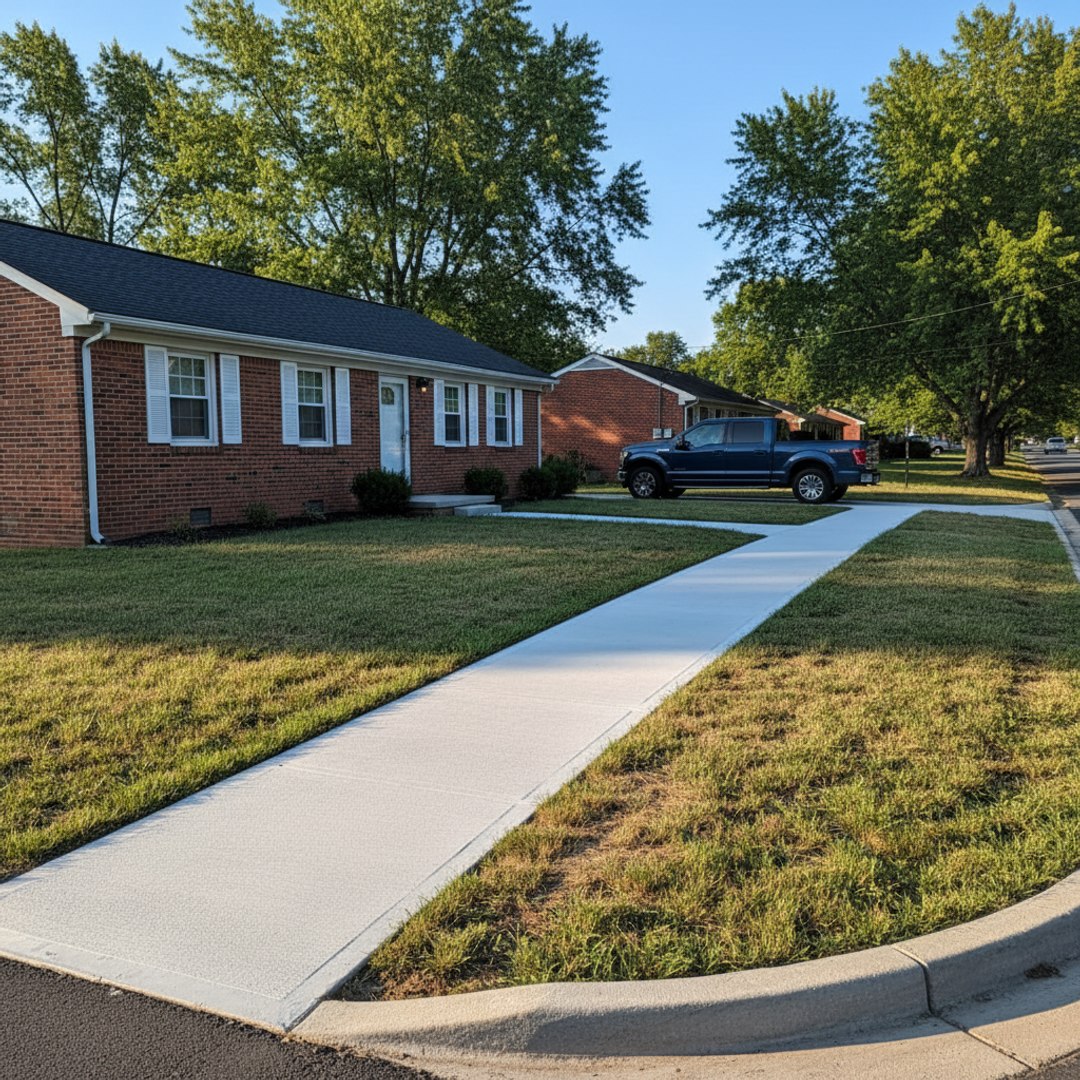
Township sidewalks usually have to match a set width and slope to pass inspection, and we've poured enough of them locally to know what your inspector is going to check. We isolate the walk from the driveway and steps with expansion joint material so the two slabs can move independently without cracking each other.
Steps see more freeze-thaw cycling than almost anything else on the property because water sits on the tread and refreezes at night. We reinforce them with rebar, not just mesh, and we pitch each tread slightly forward so water sheds instead of sitting.
A garage floor takes oil, salt off your tires all winter, and the point load of a jack when you're working on the car. We run a broom or trowel finish depending on how you use the space, and we can add a vapor barrier under the slab if the garage sits on grade near a high water table.
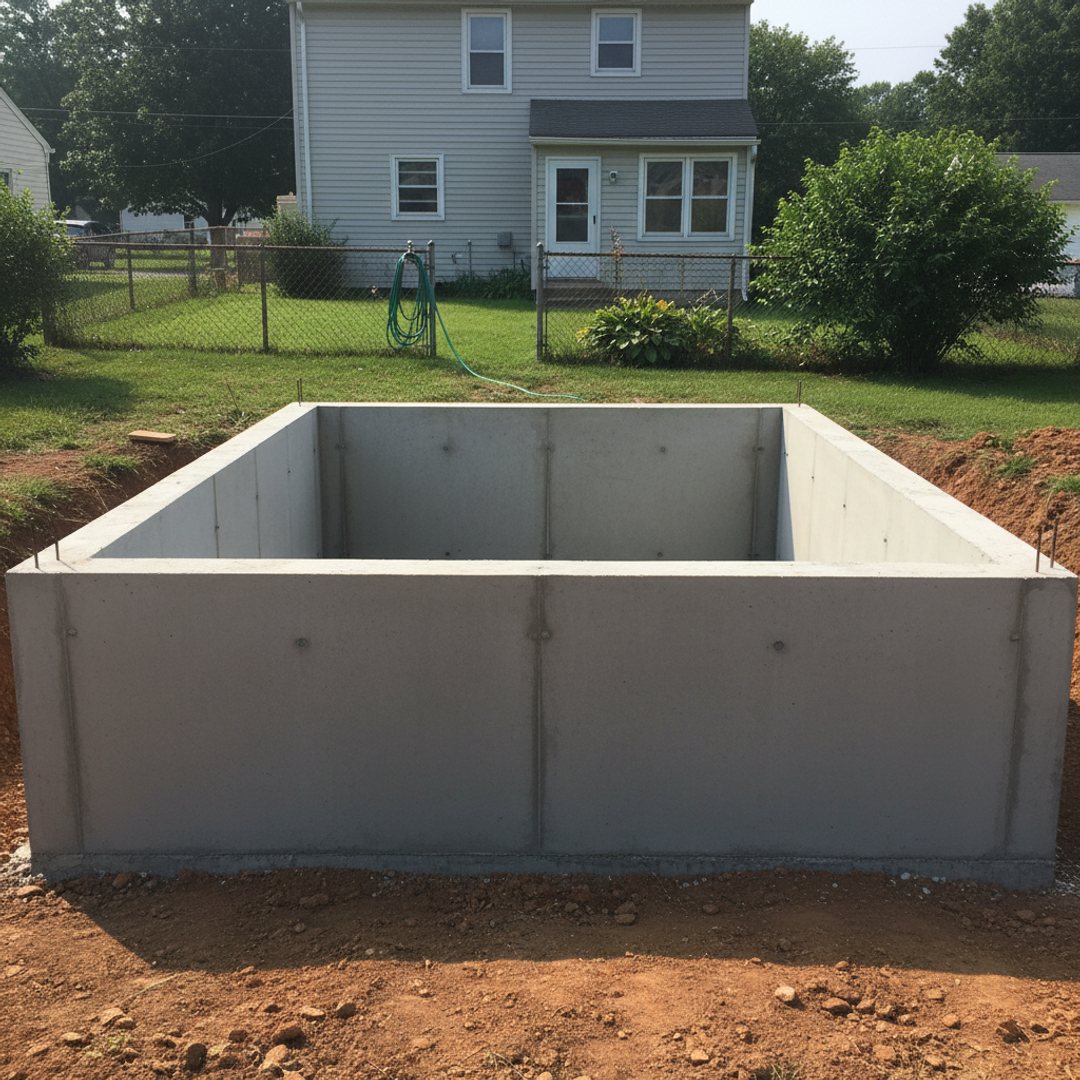
A slab foundation has to be graded, compacted, and have a vapor barrier in place before a single truck shows up, because whatever's wrong underneath shows up as a crack later. We work with your excavator on the sub-base and pour to the thickness and psi your plans call for, usually 3500 to 4000 psi for residential work.
A retaining wall that fails is almost always a drainage problem, not a strength problem, water builds up behind it and pushes until something gives. We install perforated drain pipe and gravel backfill behind every wall we build, whether it's poured concrete or block, so the pressure has somewhere to go besides your wall.
Sealing a driveway or patio every couple of years keeps deicing salt and freeze-thaw cycling from chewing up the surface, and it's a lot cheaper than replacing the slab. If the surface is already scaling or pitted but the slab underneath is solid, a resurfacing overlay can give you a fresh finish without a full tear-out.
Four steps, and no surprises in any of them.
You tell us what you want doing, we look at what is actually there, and we ask the awkward questions early.
In writing, itemised, free. If something might add cost later we flag it now rather than at the end.
Same crew throughout. We cover your floors, keep the dust down and tidy up before we leave each day.
You point out anything you are not happy with and we fix it before the invoice, not after.
Concrete work is available throughout Steelton and the surrounding area.
Common questions that come up once a concrete project is underway.
Describe the problem and we will tell you what it probably is. No obligation.